Engineering at Maryland Magazine
Future Forecast (Current Issue): Learn how Clark School faculty, researchers, and students are engineering breakthroughs for the future—all while helping people today.
Read the Current Issue: Spring/Summer 2026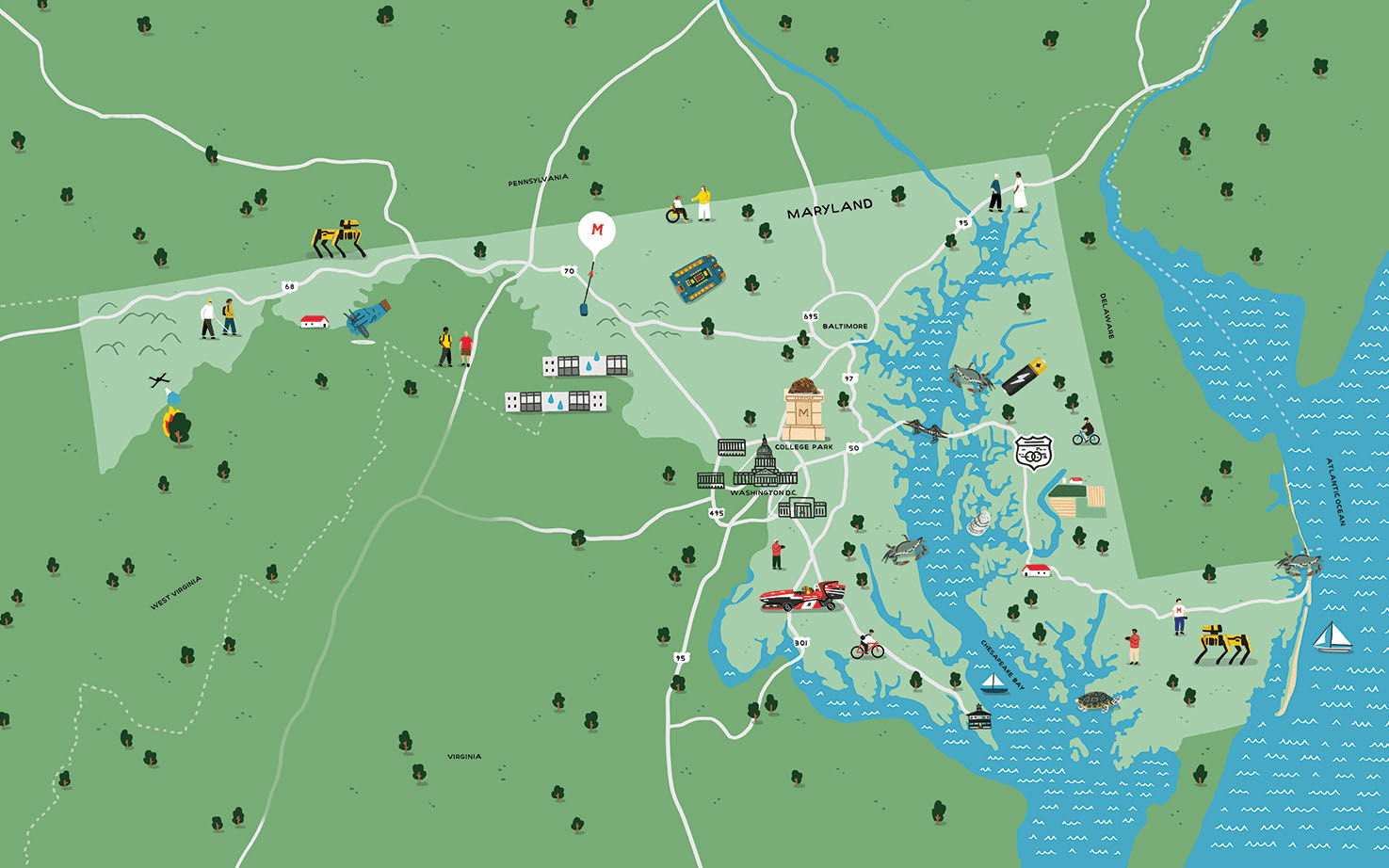
Future Forecast (Current Issue): Learn how Clark School faculty, researchers, and students are engineering breakthroughs for the future—all while helping people today.
Read the Current Issue: Spring/Summer 2026 |
Future ForecastAcross Maryland, the A. James Clark School of Engineering is accelerating partnerships and innovating solutions to our state’s, nation’s, and world’s most pressing challenges. Read this issue: Interactive Magazine | Text-Only Version (.TXT) |
 |
Solve for ExcellenceHow a high-impact strategy launched by a transformative, $220 million investment in UMD is creating new, tangible momentum for engineering progress on important societal challenges. |
 |
How to Major in the FutureAt Maryland Engineering, academics are just the beginning of a whole-student education that gives today’s engineers the tools to make tomorrow’s world better. |
 |
Built for the Breakthrough: Better Health Through EngineeringFrom preterm birth to cancer aging: Maryland engineers take aim at some of the biggest challenges in medicine. |
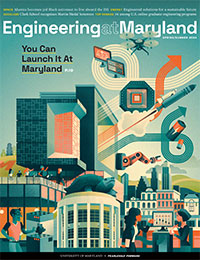 |
You Can Launch It At MarylandThe university’s entrepreneurial ecosystem has a track record of turning out creative, problem-solving businesses that make an impact, from campus to the global economy. |
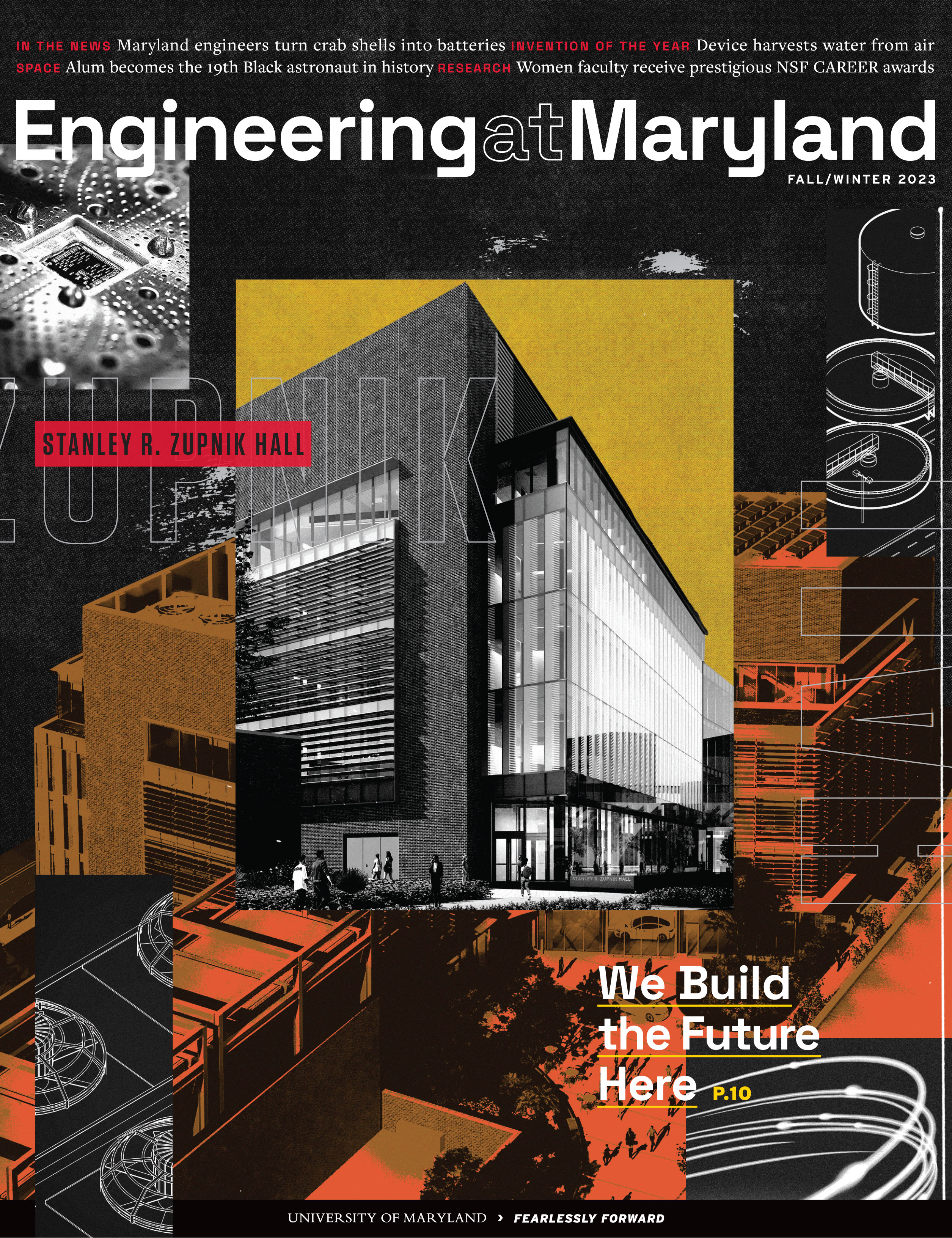 |
We Build the Future HereStanley R. Zupnik Hall is symbolic of Maryland Engineering’s exciting potential to break the mold of traditional approaches to research. Four faculty leaders tell us why. |
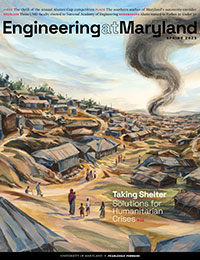 |
Taking Shelter: Solutions for Humanitarian CrisesEach year, millions of people are forcibly displaced from their homes—and then again, when fire ravages humanitarian settlements. Maryland engineers are joining a small, but emerging group of researchers in search of solutions. |
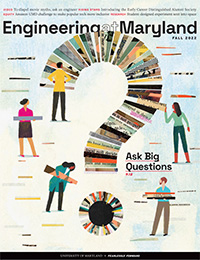 |
Ask Big QuestionsFrom tackling America's infrastructure crisis to conceiving an alternative future for food scraps, Maryland Engineers are taking on society's big questions. |
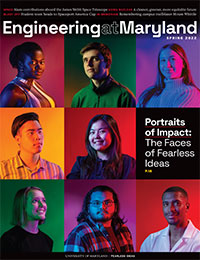 |
Portraits of Impact: The Faces of Fearless IdeasBehind Maryland's historic giving campaign is the next generation of global engineering citizens who will do good for our communities. |
Engineering at Maryland is published twice a year for alums and friends of the A. James Clark School of Engineering and the Glenn L. Martin Institute of Technology at the University of Maryland, College Park.
Contact the editor